
Slabroek Urn Field
Centuries ago, people already lived in De Maashorst. This is evidenced by the many traces that archaeologists have discovered over the past century.
Centuries ago, people already lived in De Maashorst. This is evidenced by the many traces that archaeologists have discovered over the past century. The oldest and still visible remains are the burial mounds: monuments for the deceased, who were buried centrally beneath the mound. On the Slabroekse Heide, the count of discovered burial mounds has now reached one hundred.
Because people repeatedly built mounds in the same locations, several groups of burial mounds emerged from around 2000 BCE. Multiple burial mounds were also located on the Slabroekse Heide. In the early Iron Age, an urn field was also laid out around these mounds. Whereas the burial mounds were still reserved for a small portion of the local population, in an urn field every member of the community received a place beneath a (small) mound. A few centuries after the burial site was abandoned, it was reused during the Roman period. After that, the site was permanently abandoned—until it was discovered and excavated in 1923.
‘T…
Centuries ago, people already lived in De Maashorst. This is evidenced by the many traces that archaeologists have discovered over the past century. The oldest and still visible remains are the burial mounds: monuments for the deceased, who were buried centrally beneath the mound. On the Slabroekse Heide, the count of discovered burial mounds has now reached one hundred.
Because people repeatedly built mounds in the same locations, several groups of burial mounds emerged from around 2000 BCE. Multiple burial mounds were also located on the Slabroekse Heide. In the early Iron Age, an urn field was also laid out around these mounds. Whereas the burial mounds were still reserved for a small portion of the local population, in an urn field every member of the community received a place beneath a (small) mound. A few centuries after the burial site was abandoned, it was reused during the Roman period. After that, the site was permanently abandoned—until it was discovered and excavated in 1923.
‘The Ruler of De Maashorst’
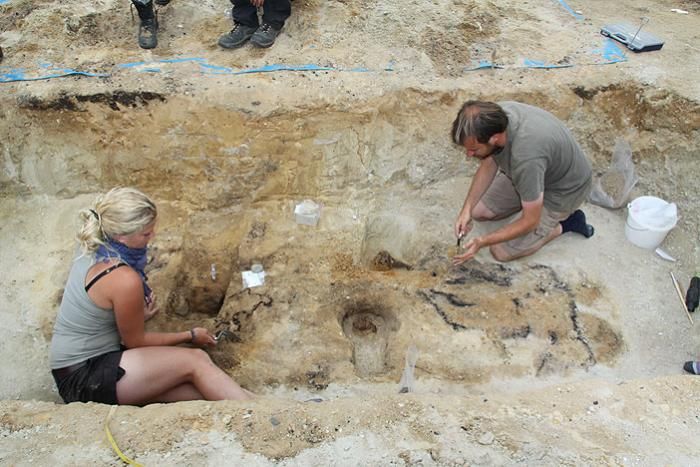
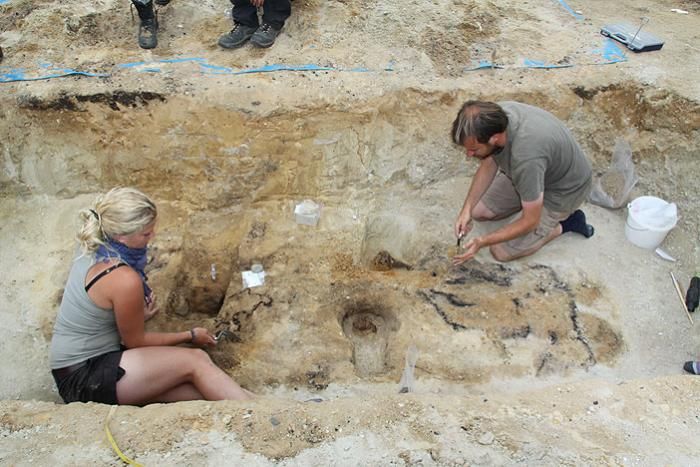
Bronze ankle and arm bracelets, pins, hair rings, grooming items, and parts of a shroud. Just a few of the finds from the unusually rich grave that archaeologists discovered on the Slabroekse Heide in 2010.
Whether it was a man or a woman is difficult to determine, but the types of jewelry and pins indicate that it was a woman of status—a prehistoric ruler buried here in an extended position 2,600 years ago. This is remarkable, because during that period, most people were cremated.
The exceptional grave goods can be admired at the National Museum of Antiquities in Leiden.
This text has been translated using AI.