
Roman Catholic Capuchin Church
A neo-classical aisleless church dating from 1898, distinguished by its brick façade in Neo-Romanesque style.
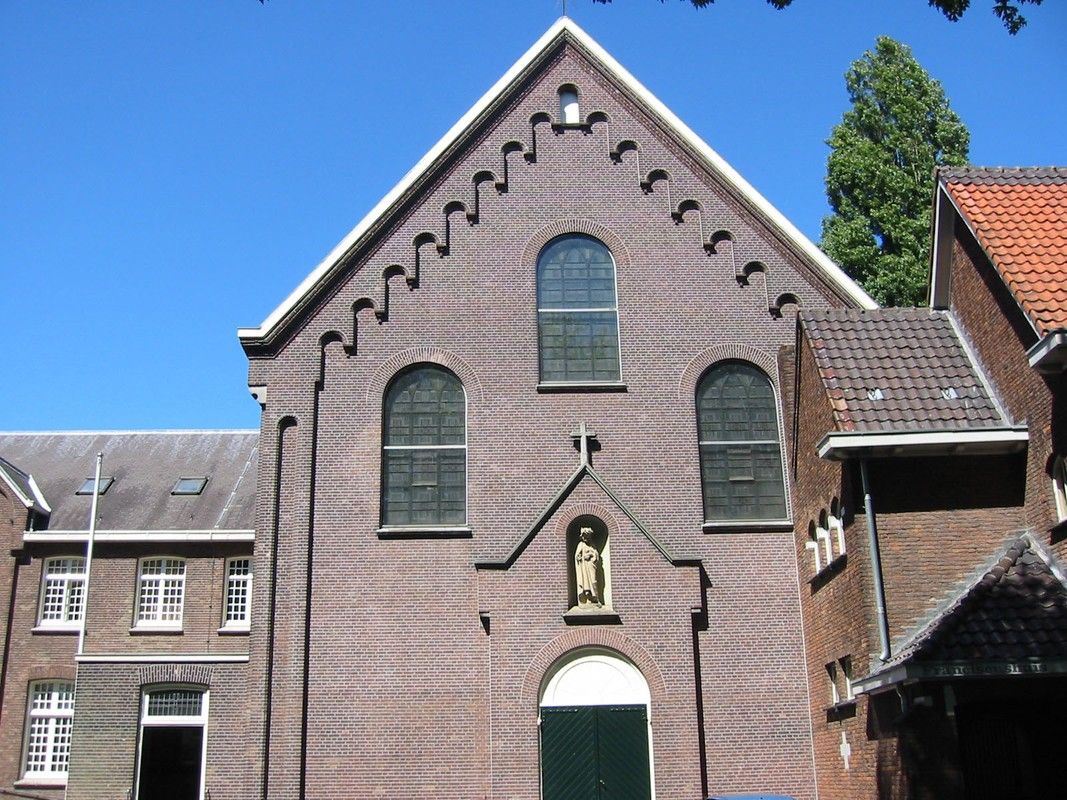
This neo-classical aisleless church was built in 1898 and features a brick façade designed in the Neo-Romanesque style. The plastered interior is characterised by pilasters, a cornice and barrel vaults. The richly decorated Neo-Renaissance high altar, side altars, pulpit and confessionals all date from the church’s construction period. In the entrance portal, visitors can see a gravestone featuring the image of a priest from 1659.
Dedicated to the Sacred Heart of Jesus, the church was officially opened on 28 August 1898. The Capuchins, followers of Saint Francis of Assisi, had already been active in ’s-Hertogenbosch from 1611 until their expulsion in 1629. Some continued their ministry in hidden churches afterwards, until Father Theodorus, himself a native of the city, was succeeded by a secular priest in 1761. At the end of the nineteenth century, the Capuchins returned to ’s-Hertogenbosch and established this church and monastery.
The monastery and church we…
This neo-classical aisleless church was built in 1898 and features a brick façade designed in the Neo-Romanesque style. The plastered interior is characterised by pilasters, a cornice and barrel vaults. The richly decorated Neo-Renaissance high altar, side altars, pulpit and confessionals all date from the church’s construction period. In the entrance portal, visitors can see a gravestone featuring the image of a priest from 1659.
Dedicated to the Sacred Heart of Jesus, the church was officially opened on 28 August 1898. The Capuchins, followers of Saint Francis of Assisi, had already been active in ’s-Hertogenbosch from 1611 until their expulsion in 1629. Some continued their ministry in hidden churches afterwards, until Father Theodorus, himself a native of the city, was succeeded by a secular priest in 1761. At the end of the nineteenth century, the Capuchins returned to ’s-Hertogenbosch and established this church and monastery.
The monastery and church were designed by the Capuchin architect Felix Baijens of Dennenburg. From 1 January 1979, following the closure of the Leonardus Church and St Peter’s Church and the creation of a single inner-city parish, the Capuchin Church also served as a parish church with special responsibility for the ’t Zand district. Since 2002, however, it has once again functioned exclusively as a monastery church, as it did before 1979.
This text has been translated using AI.
This is how to reach Roman Catholic Capuchin Church
5211 CB 's-Hertogenbosch Plan your route to Roman Catholic Capuchin Church