
Nieuw Herlaer Castle
The complex has been a national monument since 1973, and the current buildings date largely from the nineteenth century, when they were constructed as a monastery and almshouse.
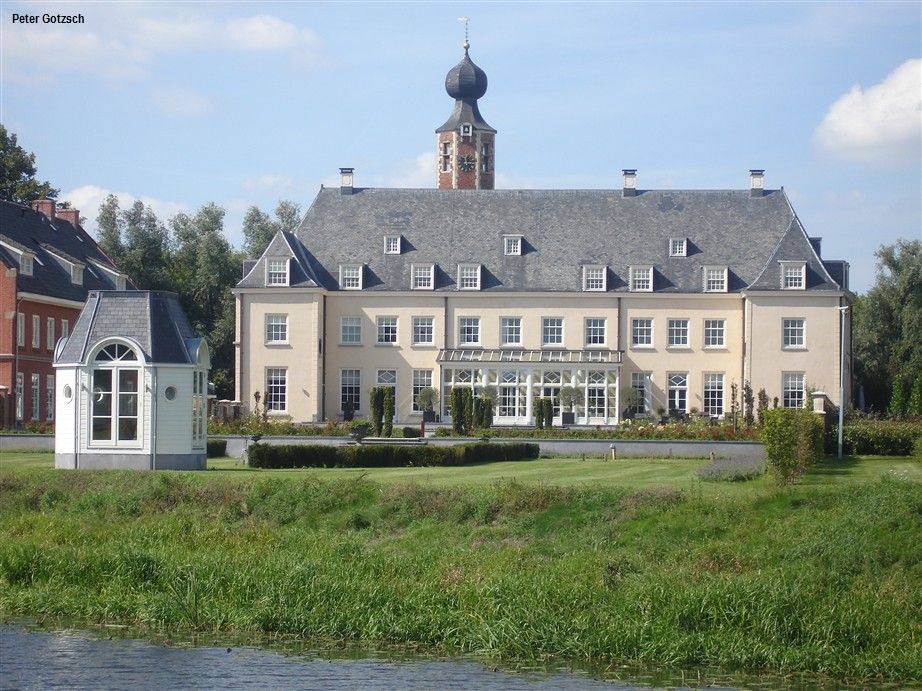
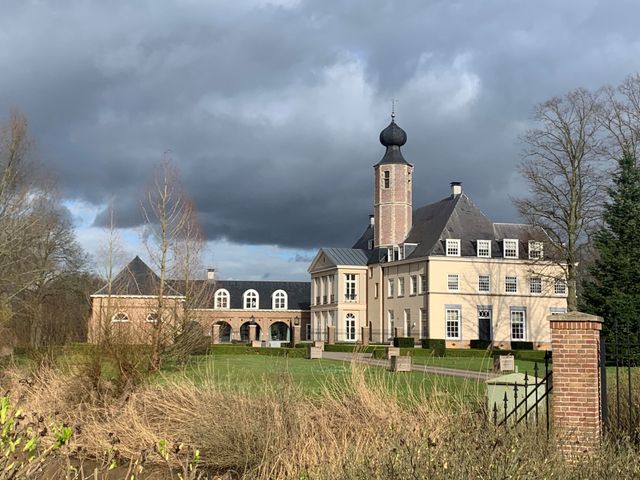
The complex has been a national monument since 1973, and the current buildings date largely from the nineteenth century, when they were constructed as a monastery and …
The complex has been a national monument since 1973, and the current buildings date largely from the nineteenth century, when they were constructed as a monastery and almshouse. Of the older structures, the slender, octagonal stair tower with a tapered spire from the fifteenth century has been preserved, with an eighteenth-century section built around it. The late 14th-century castle was originally located behind the still-existing stair tower, which was built in the 15th century. In front of the tower was a square, surrounded by a wall with arrowslits. There was also a fortified gatehouse with a drawbridge. The entire complex was surrounded by moats. In 1621, Nieuw-Herlaar was referred to as: Nyent-Herlaer, 't hoff tot nyent-Herlaer met zijn bijvanghe, just as it is situated there, surrounded by the Dommele flowing nearby. In 1736, it was reported: Nieuw-Herlaer, on the east side of the demolished hall, with the cellar beneath the demolished hall, bordered by its moat and the Dommel River, with gardens, an orchard, stables, a barn, fishing rights, a fish pond in the courtyard, a chapel, a brewery, and comfortable dwellings thereon, surrounded by hedges and plantations. In 1791, the old castle was demolished on the orders of Van Bonstetten, and the current one was built on the other side of the tower. It was described as a very old and dilapidated building, and Stephanus Hanewinkel reported: “Mr. Bonstetten had it demolished and, in its place, had a modern country house built; of the old castle, which had once been a fortress, nothing remained but the tower.” Further expansions took place starting in 1799, when the castle became a seminary. The subsequent uses also required many renovations. After the Catholic institutions left in 1970, the site fell into disrepair once again, but after 1978 the castle was restored and most of the outbuildings, with the exception of the nunnery, were demolished. Nieuw-Herlaer was founded around 1300. The main building was successively used as a seminary, an institute for the deaf and mute, a convent for Benedictine nuns who had fled France, a convent for the Sisters of the Divine Savior from Vienna, and a home for the mentally and physically disabled.
It is not open to the public because it is a private residence.
This text has been translated using AI.