
St. Anthony the Abbot Mill
St. Anthony the Abbot is the name of a windmill that has stood in Borkel en Schaft since 1865.
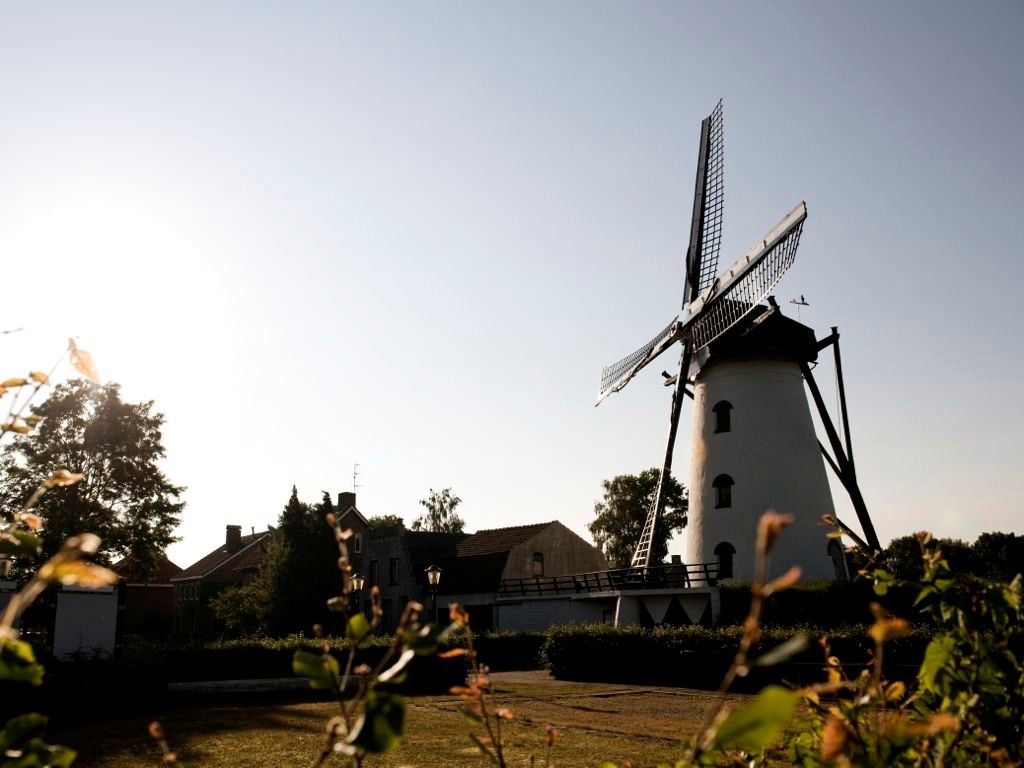

St. Anthony the Abbot is the name of a windmill that has stood in Borkel en Schaft since 1865. The mill is named after St. Anthony, the patron saint of the former chapel in Borkel.
History
This stone smock mill was a belt-driven mill used for grinding grain, but rye and buckwheat were likely the primary products originally milled here. In 1908, it was equipped with an 8-horsepower gasoline engine. However, this engine lacked sufficient power and was replaced in 1912 by an 18-horsepower gas engine. A miller’s house was also built at that time. It was now referred to as a steam and wind grain mill, although there was no steam engine.
In 1935, a fire destroyed the mill’s drive mechanism. …
St. Anthony the Abbot is the name of a windmill that has stood in Borkel en Schaft since 1865. The mill is named after St. Anthony, the patron saint of the former chapel in Borkel.
History
This stone smock mill was a belt-driven mill used for grinding grain, but rye and buckwheat were likely the primary products originally milled here. In 1908, it was equipped with an 8-horsepower gasoline engine. However, this engine lacked sufficient power and was replaced in 1912 by an 18-horsepower gas engine. A miller’s house was also built at that time. It was now referred to as a steam and wind grain mill, although there was no steam engine.
In 1935, a fire destroyed the mill’s drive mechanism. However, it proved economically viable to rebuild the mill, incorporating improved sails based on the system developed by Adriaan J. Dekker. The mill’s shell, which had previously been half plastered and half exposed brickwork, was painted white after the restoration. The cast-iron gear mechanism likely came from the windmill on Hoge Ham in Dongen, which was demolished that same year.
During World War II, part of the mill was used as a field hospital for some time. Afterward, the mill continued to grind grain until 1955. In 1953, part of the mill hill was excavated to build a warehouse connected to the motorized mill.
In 1966, the mill was restored, during which the Dekker system was replaced with the traditional Dutch sail system. The mill reopened in 1967. Quite a few secondhand parts had been used, which meant the mill did not perform optimally. In 1976, milling operations ceased, and the mill’s condition began to deteriorate.
Present
In 1987, the mill was sold to the municipality of Valkenswaard, which had it restored. By 1990, it was ready to grind again and was put back into regular use. In 1999, the mill became part of the Stichting Molen ‘Sint Antonius Abt’ foundation. The mill is also open to the public.
Next to the mill is a botanical garden, which is also managed by the foundation and features traditional Kempen farm herbs and vegetables.
This text has been translated using AI.