
Sint-Antonius school and headmasters house
The school and teacher’s residence were built in the Neo-Renaissance style. In 1919, the school was inaugurated by Dean Th. Moussault. The building is a listed monument. Neither the residence nor the former school building are open to the public; they can only be viewed from the outside.
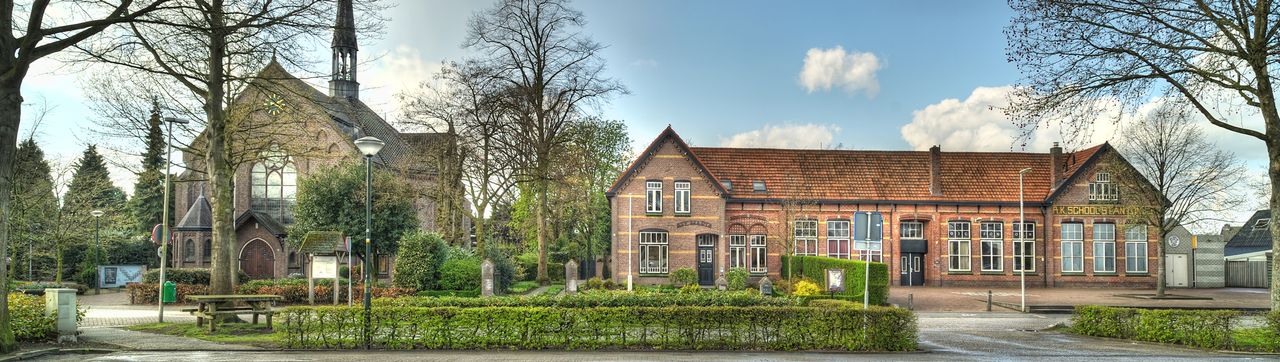
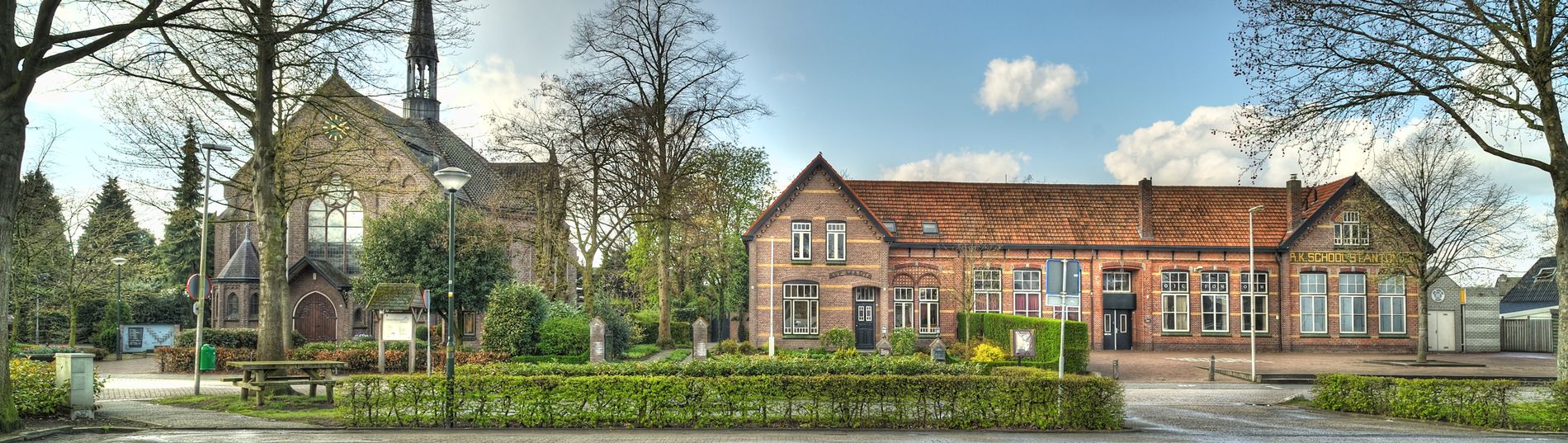
The school and teacher’s residence were built in the Neo-Renaissance style. In 1919, the school was inaugurated by Dean Th. Moussault. The building is a listed monument. Neither the residence nor the former school building are open to the public; they can only be viewed from the outside.
The St Anthony’s school and the teacher’s house date from 1919. In 1951, it became a girls’ school under the new name ‘Mariaschool’, run by the Sisters of Our Lady, who were based in the old teacher’s house (‘Ave Maria’). In 1981, the building was converted into a youth club. In 2002, this distinctive building was designated a listed building.
Description
The school occupies the majority of the building. This is a…
The school and teacher’s residence were built in the Neo-Renaissance style. In 1919, the school was inaugurated by Dean Th. Moussault. The building is a listed monument. Neither the residence nor the former school building are open to the public; they can only be viewed from the outside.
The St Anthony’s school and the teacher’s house date from 1919. In 1951, it became a girls’ school under the new name ‘Mariaschool’, run by the Sisters of Our Lady, who were based in the old teacher’s house (‘Ave Maria’). In 1981, the building was converted into a youth club. In 2002, this distinctive building was designated a listed building.
Description
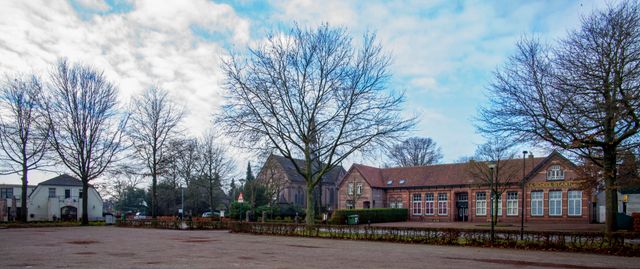
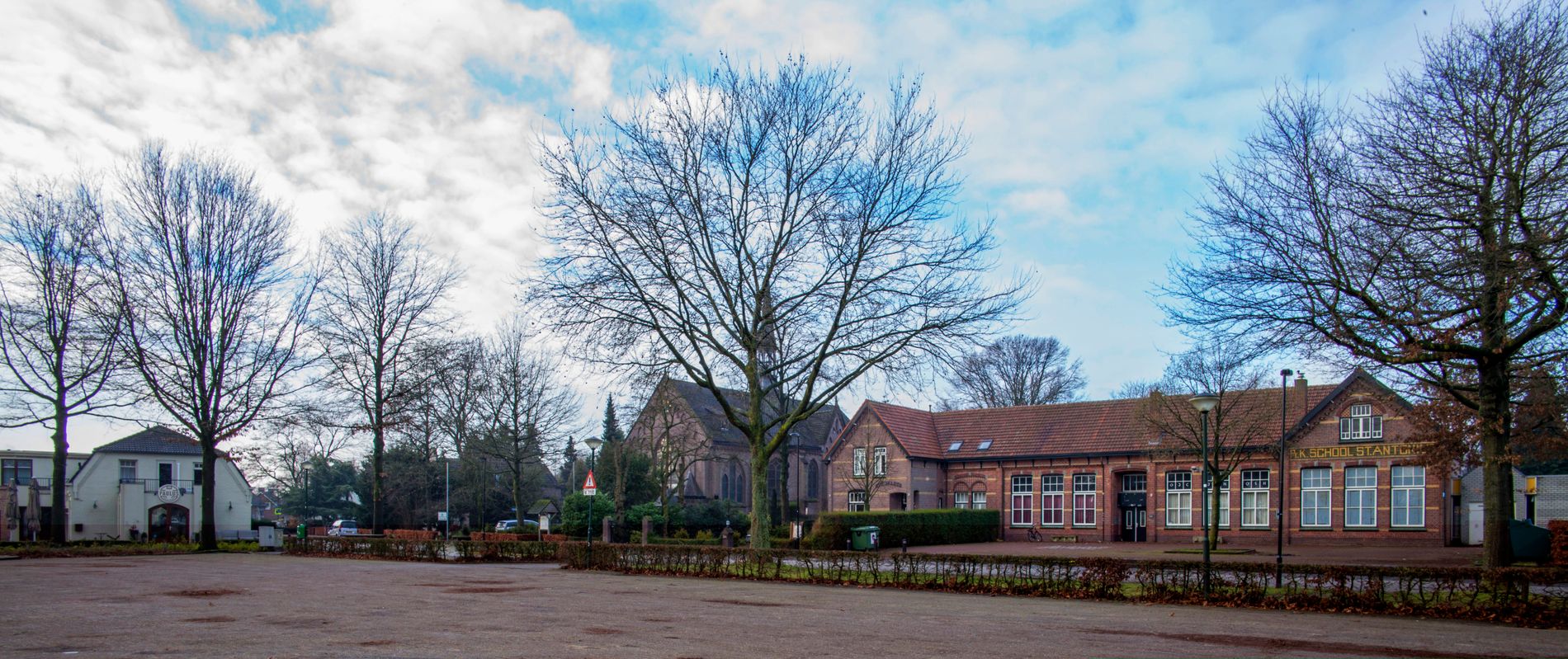
The school occupies the majority of the building. This is a single-storey building with high ceilings beneath a gable roof, the ridge of which runs parallel to the street. The right-hand end features a pediment beneath a hipped roof. To the left of the school lies the projecting residential section, a single storey high with a gable and extending into the final bay of the school wing. The house has a hipped roof with a finial at the rear. The roofs are fitted with gutters on corbels. The whole structure is built of brick, with the residential and school sections distinguished from one another by the colour of the brick. The façades feature bands of brickwork in a contrasting colour. A stepped frieze runs around the gables; between them, the elongated façade is finished with a cornice featuring a brick mosaic, separated at the bottom by a dentil moulding. The façade features four-pane windows with a six-pane transom, with each former classroom having three windows. The relieving arch is a gentle segmental arch, constructed in red brick with a plastered keystone and spandrels. Window sills are made of green glazed brick. In the gable, on the right, a composite window is set beneath a round arch, the spandrel filled with a polychrome brick mosaic. Below this, a band of glazed tiles bearing the inscription ‘R.K. SCHOOL ST. ANTONIUS’ is visible.
In the portico, a commemorative plaque has been installed bearing the inscription:
‘THROUGH THE CARE, DILIGENCE AND LOYALTY OF THE RESIDENTS/THIS GRAND BUILDING WAS REALISED/18-11 -1918/14-8-1919/THE BOARD/L. KOPPENS CHAIRMAN, L. AARTS SECRETARY, H. v. HEUGTEN TREASURER/H. ‘S WINKELS, G. AARTS’.
At right angles to the rear façade of the school stands a single-storey structure under a gable roof, covered with interlocking tiles. This section (the former gymnasium) features high-set windows. The layout has been altered. Some elements of the original interior, such as the moulded wooden window frames, have been preserved. The residential section has T-shaped windows; the two windows adjoining the school are fitted with transom windows featuring small glazing bars and round arches, the spandrels of which are filled with a brick mosaic, brought together under a single segmental arch. In the gable of the house, the windows are set beneath a segmental arch. The entrance, a panelled door, is situated in a shallow porch. To the left of this is a three-part window with small transom and sash windows, filled with coloured cathedral glass.
On the ground floor of the side façade are T-shaped windows; directly beneath the eaves are a few small windows. Behind the house is a single-storey extension with six-pane windows. A paved square has been laid out in front of the school. An old tree stands on this square. In front of the house is a garden, separated from the school playground and the street by a privet hedge.
Assessment
The school and teacher’s house are of general importance due to the cultural-historical values they possess as a representative of a former village school in an early 20th-century parish village, and due to the integrity and rarity of the building type. Architectural-historical values lie, among other things, in the detailing and the use of materials.
Source: Cultural Heritage Agency of the Netherlands
Did you know?
As early as 1905, there was talk of the need to establish a school in Heusden? However, it took many more years before Heusden got its own school. The foundations were laid in 1918 and actual construction began in 1919.
Practical information
- Today, the school building houses a youth club (Jonosh) and a youth association (Jong Nederland Heusden).
- A cabinet of curiosities with a changing display of objects has been set up in front of the teacher’s house. Do be sure to take a look!
- Neither the house nor the former school building are open to the public; they can only be viewed from the outside.
This is how to reach Sint-Antonius school and headmasters house
5725 AM Asten-Heusden Plan your route to Sint-Antonius school and headmasters house