
National mill days
The mills in Lieshout take part in National Mill Days.
The mills in Lieshout take part in National Mill Days.
The windmills in Lieshout are participating in the National Windmill Days.
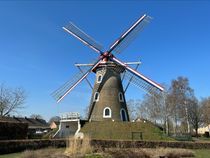
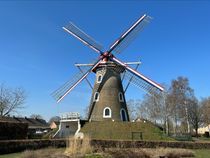
Molen de Leest is a grain mill built in 1900. This is actually strange, because even then there were steam engines, diesel engines, and electric motors that provided 24-hour operational reliability. However, these were still expensive at the time, which is why the choice was made for a windmill. The mill building of de Leest was newly bricked, and the entire interior comes from windmills that were being demolished in large numbers at that time, making it sometimes hundreds of years old. Parts from the Oostwind windmill in Schiedam, which was built in 1730 and demolished in 1899, were likely used for de Leest.
Molen de Vogelenzang is the oldest of the two…
The mills in Lieshout take part in National Mill Days.
The windmills in Lieshout are participating in the National Windmill Days.
Molen de Leest is a grain mill built in 1900. This is actually strange, because even then there were steam engines, diesel engines, and electric motors that provided 24-hour operational reliability. However, these were still expensive at the time, which is why the choice was made for a windmill. The mill building of de Leest was newly bricked, and the entire interior comes from windmills that were being demolished in large numbers at that time, making it sometimes hundreds of years old. Parts from the Oostwind windmill in Schiedam, which was built in 1730 and demolished in 1899, were likely used for de Leest.
Molen de Vogelenzang is the oldest of the two windmills in Lieshout and dates from 1819. This mill is now a grain mill, but in the past, de Vogelenzang was also used as an oil mill and a hulling mill. In the oil mill, oil was extracted from locally grown crops, mostly for local use, for frying and roasting food and as fuel for oil lamps. In the hulling mill, barley was formerly hulled into groats.
This year marks the 50th anniversary of the restoration of both mills, with the Leest mill being the first to be completed on May 10, 1976, and proudly put back into operation. Since that year, the Leest has operated every Saturday, and since 2013 also every Tuesday afternoon, and was open to visitors. This was widely utilized, consistently receiving enthusiastic reactions.
The Leest can be visited on Saturdays and Sundays from 10:00 to 16:30. The Vogelenzang can be visited on Sundays from 11:00 to 16:00.
Here, you will find National mill days
Prices
- Free